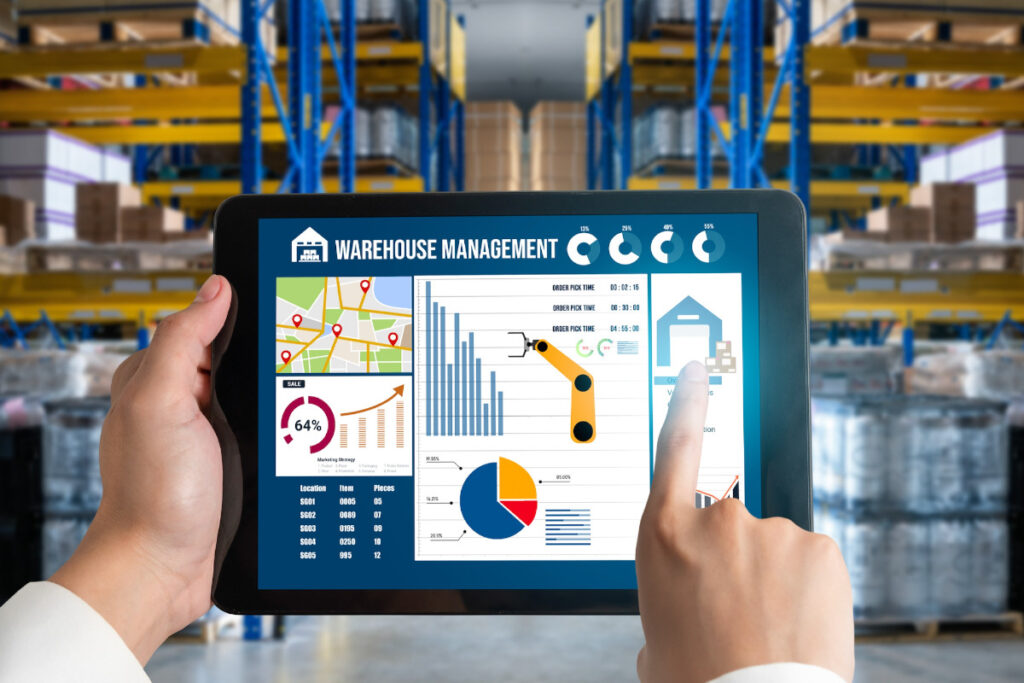
Making supply chain decisions has always required judgment and experience. But in an environment where inflation pressures costs, logistics disruptions are frequent, and consumption patterns shift rapidly, judgment alone is no longer enough. Companies that continue relying on intuition or simple historical data are operating with a competitive advantage that erodes month by month.
The numbers make the problem clear. Deloitte reports that 67% of companies in Latin America acknowledge having limited visibility into their supply chain beyond the first tier of suppliers. That blind spot has direct consequences: undetected supply risks, avoidable cost overruns, and savings opportunities that never get identified.
Advanced analytics is not an abstract technology solution. It is a set of tools — predictive models, machine learning, big data, and prescriptive analytics — that turns information into strategic decisions with greater speed and precision.
The real cost of deciding without data
Demand planning errors are not minor. Gartner estimates that forecast errors generate losses equivalent to 5% of annual revenue in consumer goods companies. In Colombia, sectors like retail, food, and pharmaceuticals face this challenge with particular intensity, compounded by dependence on international suppliers and exchange rate volatility.
The problem is rarely a lack of data. It is the lack of capacity to process it, interpret it, and turn it into timely action.
Where advanced analytics generates the greatest impact
Demand forecasting with machine learning
Traditional forecasting methods rely on historical series. Machine learning goes further: it incorporates external variables such as seasonality, input price variations, macroeconomic trends, and consumer behavior across digital channels. The result is more accurate forecasts that reduce both excess inventory and stockouts.
A supermarket chain in Mexico reduced inventory stockouts by 22% after implementing machine learning demand models, while simultaneously improving the rotation of perishable products.
Optimización de compras y sourcing estratégico
Advanced analytics identifies spending patterns, consolidates suppliers, and supports negotiation strategies grounded in evidence. Spend cube analysis uncovers savings opportunities that traditional methods miss. Price benchmarking across local and international markets strengthens negotiating positions. And simulation models allow companies to evaluate purchasing scenarios before committing to decisions.
McKinsey estimates that companies applying advanced analytics in procurement achieve additional savings of 3% to 8% compared to those relying solely on traditional negotiations.
Risk management with extended visibility
Visibility beyond the first tier of suppliers is one of the greatest challenges in supply chain management. Advanced analytics makes it possible to map financial and geopolitical risks across the supplier base, anticipate logistics disruptions using real-time data, and assess the carbon footprint and sustainability risks at each link in the chain.
A manufacturing company in Brazil used predictive risk models to detect vulnerabilities among its Asian suppliers. That allowed it to diversify its sourcing base and avoid significant losses during the 2021 logistics crisis.
Prescriptive analytics: not just predicting, but recommending
La analítica prescriptiva va un paso más allá de la predicción. Mediante algoritmos avanzados, sugiere qué hacer: el mix óptimo de proveedores, la cantidad exacta de inventario de seguridad, el medio de transporte más eficiente considerando costo, tiempo y huella ambiental. Deloitte reporta que las compañías que aplican analítica prescriptiva en supply chain aumentan en un 15% su nivel de servicio al cliente mientras reducen costos logísticos en un 12%.
Results that are already being achieved
Companies that have adopted advanced analytics in their supply chains report consistent benefits: operational cost savings of 10% to 20%, forecast accuracy improvements of up to 30%, reduced stockouts, and greater resilience against disruptions.
A nearby case illustrates the potential well. A consumer goods company in Medellín implemented advanced analytics to optimize its distribution network and achieved a 12% annual reduction in logistics costs, an 18% decrease in delivery times, and a meaningful improvement in the availability of key products at point of sale.
How Center Group supports this transformation
At Center Group, we work with companies that want to move beyond partial visibility and start making supply chain decisions backed by data. This includes implementing demand forecasting models, applying spend analytics to identify procurement savings opportunities, designing risk management models with extended visibility, and developing prescriptive analytics capabilities tailored to each operation.
If your organization wants to transform its supply chain into an engine of efficiency and growth, we can help you identify where to start and what impact is realistic to expect in the short term.
Preguntas frecuentes sobre analítica avanzada en supply chain
¿Qué es la analítica avanzada en supply chain y para qué sirve?
La analítica avanzada en supply chain es el uso de modelos predictivos, machine learning y analítica prescriptiva para convertir datos en decisiones estratégicas. Permite anticipar riesgos de abastecimiento, optimizar el gasto en procurement e incrementar el nivel de servicio al cliente con mayor velocidad y precisión que los métodos tradicionales.
¿Qué resultados concretos genera la analítica avanzada en procurement?
Las empresas que aplican analítica avanzada en procurement logran ahorros adicionales de entre el 3% y el 8% frente a las que dependen de negociaciones tradicionales, según McKinsey. A nivel operativo se reportan reducciones de entre el 10% y el 20% en costos, incrementos de hasta un 30% en la exactitud de pronósticos de demanda y mayor resiliencia ante disrupciones logísticas.
¿Cómo ayuda el machine learning a mejorar los pronósticos de demanda?
A diferencia de los métodos tradicionales basados en series históricas, el machine learning incorpora variables externas como estacionalidad, variaciones de precios, tendencias macroeconómicas y comportamiento del consumidor. El resultado son pronósticos más precisos que reducen tanto el exceso de inventario como los quiebres de stock, con casos documentados de mejoras del 30% en exactitud.
¿Qué es la analítica prescriptiva y cómo se diferencia de la analítica predictiva?
La analítica predictiva anticipa qué va a ocurrir. La analítica prescriptiva va un paso más allá y recomienda qué hacer: el mix óptimo de proveedores, la cantidad exacta de inventario de seguridad o el medio de transporte más eficiente. Según Deloitte, las empresas que la aplican en supply chain aumentan un 15% su nivel de servicio mientras reducen costos logísticos en un 12%.
¿Cómo puede una empresa en Colombia empezar a implementar analítica avanzada en su cadena de suministro?
El punto de partida es identificar las áreas de mayor costo o riesgo: pronóstico de demanda, gestión de proveedores o planificación de inventarios. A partir de ahí se definen los datos disponibles, los modelos más adecuados y los indicadores de éxito. Trabajar con un socio especializado en procurement y supply chain permite acelerar la implementación y obtener resultados medibles desde las primeras semanas.